Skip to content

Flat-roof patio specialists

(08) 6186 7419

Southern suburbs ยท City of Kwinana

Flat Roof Patios in Kwinana

Kwinana has two things working on a steel roof at once, and most of Perth only has one. The Sound puts salt in the air, and the industrial strip along the coast puts other things in it.

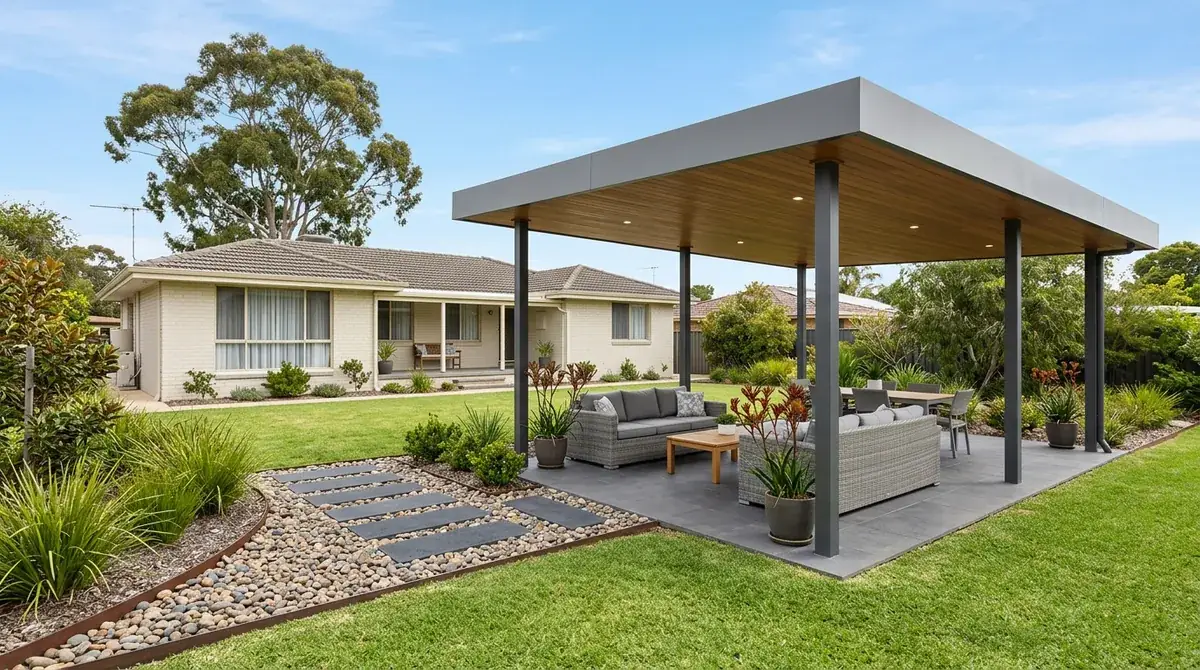
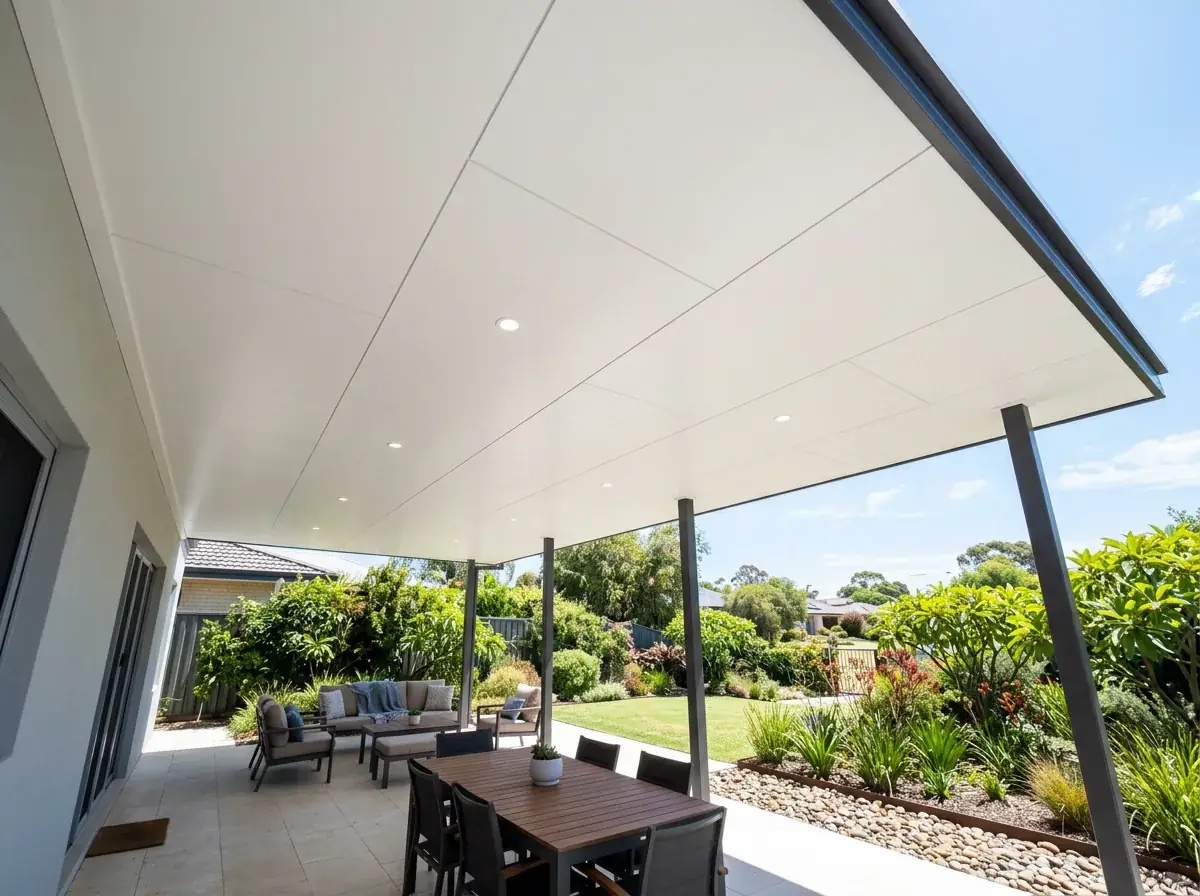
A freestanding flat patio roof standing clear of a 1950s Medina brick house, set out in the large rear yard away from the low fascia.

Local conditions

What building in Kwinana actually involves

Council
City of Kwinana
Atmosphere
Two loads on one roof. Salt off Cockburn Sound plus airborne deposition from the coastal industrial strip, which puts coastal-grade sheet and stainless fixings on the baseline spec.
Typical housing
Medina, Calista, Orelia and Parmelia were laid out from the early 1950s as a town for the industrial workforce. Low fascias, shallow eaves, and asbestos cement common in soffits, sheds and lean-tos of that era.
Typical block
The 1950s and 60s lots are large by any modern standard with small houses on them. Estate lots east of the freeway at Wellard, Bertram and Casuarina are a fraction of the size.
Ground
Sandy coastal plain. Soakwells recover quickly between storms, so the stormwater array is modest compared with the clay suburbs east of Perth.

Free site measure

We will confirm the council, the wind classification and the soil for your actual address, then price the patio against those numbers rather than a suburb average.

Get a Quote(08) 6186 7419

Before anything is drawn

What changes a patio build in Kwinana

Same crew and same engineering everywhere we work. These are the parts of the job this part of Perth decides for us.

  1. Check what is behind the lining before anything is bolted to it

    Plenty of the 1950s and 60s houses have picked up a rear lean-to or an enclosed verandah over the decades, and none of it was built to carry a patio load. The materials of that era need identifying before a drill goes anywhere near them. A freestanding roof set clear of the house is often the cleanest answer here rather than the fallback.

  2. Washing the roof is part of owning one here

    Rain only cleans the surfaces it reaches, and the underside of the sheet, the top face of the beam, the inside of the gutter and the head of every screw stay sheltered. That is exactly where salt and industrial deposits build up. A fresh-water hose down a few times through summer, and clear gutters before winter, is the single most useful thing an owner can do.

  3. East of the freeway the usual pairing inverts

    Wellard, Bertram, Casuarina and Anketell sit back from the water on flat, open coastal plain. Exposure is high because low fences, young trees and half-built streets provide almost no shielding, so the assessed wind classification can come back above an established suburb. The steel goes the other way, because those addresses are outside the marine environment and standard Colorbond is correct.

On the ground

Suburbs we cover in Kwinana

10 suburbs across the City of Kwinana, and the streets on its edges.

Not sure which one you are in? Call (08) 6186 7419

  • Medina
  • Calista
  • Orelia
  • Parmelia
  • Bertram
  • Wellard
  • Casuarina
  • Anketell
  • Wandi
  • Kwinana Beach

That combination sets the specification early. Coastal-grade sheet, stainless fixings, sealed penetrations and a washdown habit, because what lands on a roof here does not all rinse off in a passing shower.

The housing tells the town's own story. Medina, Calista, Orelia and Parmelia were laid out from the 1950s onward as a town for the people working the industrial area, and much of that stock is still there on generous blocks.

East of the freeway it is a different decade entirely. Wellard, Bertram, Casuarina and Anketell are estate suburbs from the last twenty years, on smaller lots with the alfresco already built in.

Note 01

A town built for a refinery, and the houses it left behind

Medina was laid out in the early 1950s and Calista, Orelia and Parmelia followed. Modest houses, wide streets, and lots far larger than anything a project builder would give you today.

Those houses need looking at before anything is fixed to them. Low fascias, shallow eaves, and building materials of an era when asbestos cement was ordinary in soffits, sheds and lean-tos.

None of that stops a patio. It does mean the attachment method is decided on site, and a freestanding roof standing clear of the house is often the cleanest answer rather than the fallback.

Plenty of these houses have also been added to over the decades. A rear lean-to or an enclosed verandah from the 1970s is not automatically capable of carrying a patio load, so the structure behind the lining gets checked before anything is bolted to it.
Note 02

Salt and industrial air on the same sheet

Salt alone is a known problem with a known solution. Salt plus airborne industrial deposition is a harsher environment, and it rewards a specification that does not cut corners at the fixings.

So the build goes coastal grade throughout. Marine-grade Colorbond, stainless fasteners including the ones nobody sees, sealed penetrations, and no aluminium bearing directly on unprotected steel.

Exposure varies across the council with distance and prevailing wind, which is why the spec is set against the address. A block at Kwinana Beach and one at Casuarina are not the same environment.

Note 03

Washing the roof is part of owning one here

Rain only cleans the surfaces it reaches. The underside of the sheet, the top face of the beam, the inside of the gutter and the head of every screw stay sheltered, and that is exactly where deposits accumulate.

So a fresh-water hose down a few times through summer is genuinely part of keeping a Kwinana patio sound. It costs nothing and it is the single most useful thing an owner can do.

Gutters deserve their own look. Anything sitting in a gutter holds moisture against the steel long after the weather has passed, and a clear gutter is worth more than an extra coat of anything.

Worth knowing

  • Rinse roof, gutters and the underside with fresh water through summer
  • Clear gutters before winter so nothing sits wet against the steel
  • Touch up drill scratches and cut edges rather than leaving bare metal exposed

Note 04

Inland estates: more wind, less salt

Wellard, Bertram, Casuarina and Anketell sit a few kilometres back from the water on flat, open coastal plain. That inverts the usual pairing in an interesting way.

Exposure is high because there is nothing upwind. Low fences, young trees and half-built streets provide very little shielding, so the assessed wind classification can come back above what an established suburb would give you.

The steel specification goes the other way. Those addresses are outside the marine environment, so standard Colorbond and ordinary fixings are appropriate, and the extra money goes into structure rather than coating.

It is worth understanding which of those two things a quote has priced. A coastal steel spec on an inland estate lot is money spent on nothing, and a suburban wind assumption on an exposed one is a certificate that will not stand up at assessment.

Note 05

Small houses on big blocks, and the freedom that gives you

The 1950s and 60s lots through Medina, Calista and Orelia are large by any modern standard, and the houses on them are not. There is real ground left over.

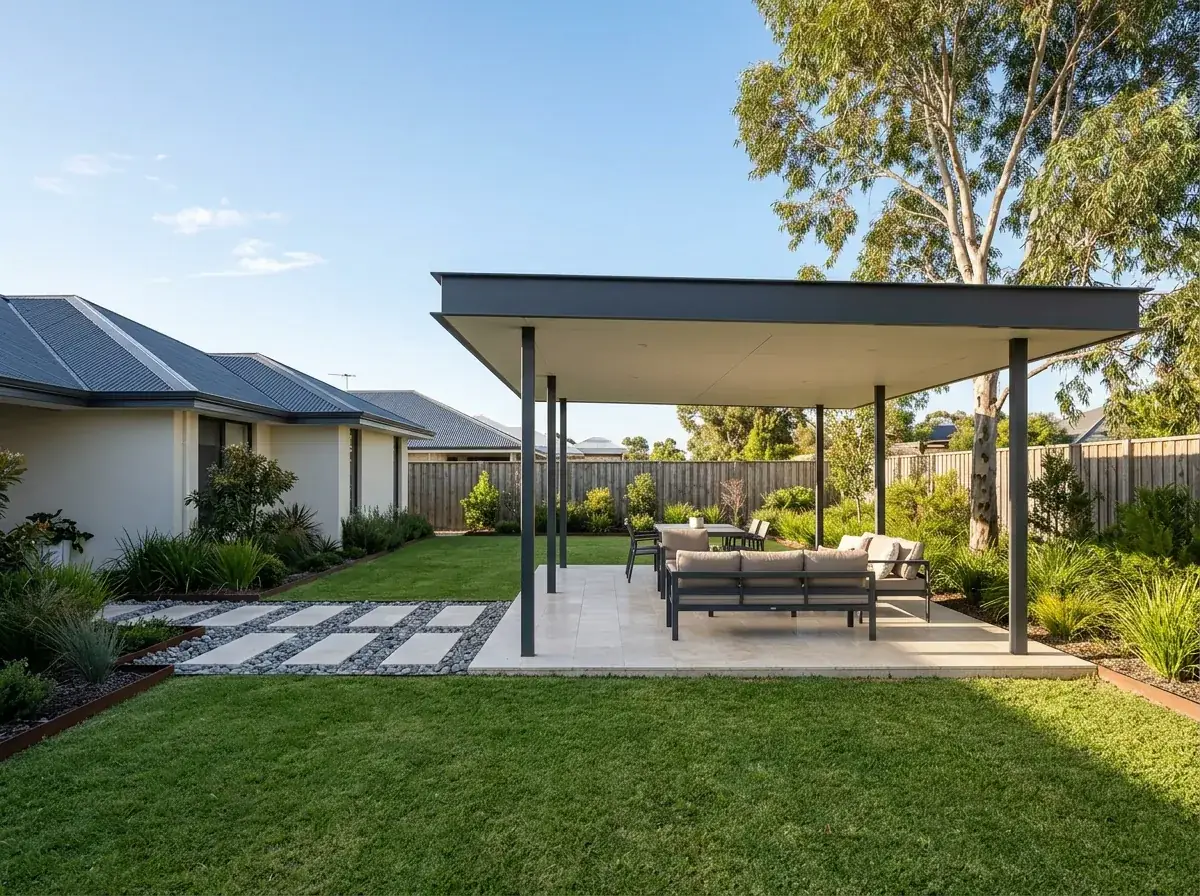
That opens up an option most Perth backyards cannot offer. The patio does not have to sit against the back wall, so it can be positioned for the sun and the breeze rather than for the door it happens to be near.

It also makes the build straightforward. Room for materials, room for the crew, and no need to carry six-metre sheets down a side path a metre wide.

A detached structure has a second advantage on these houses. It touches nothing, so the age and condition of the existing roof and eaves stop being a constraint on the design entirely.

Note 06

City of Kwinana approvals

A building permit from the City of Kwinana is required before construction, because a patio is a Class 10a structure. The pack is a site plan, elevations, structural engineering matched to the assessed wind classification and a stormwater design.

Sand makes the stormwater half easy. Soakwells in this ground recover quickly between storms, so the array is usually modest compared with the clay suburbs further east.

One local note. Land between the industrial area and the residential suburbs carries planning buffer provisions aimed at land use rather than domestic structures, so they rarely touch a patio, but the mapping is worth a look if your block sits close to that edge.

Building a flat patio in Kwinana?

We know the councils, the block sizes and the wind ratings out here. Book a free measure and we will tell you what your address allows.

Frequently Asked Questions

It adds to what salt is already doing, which is why the specification here does not cut corners. Coastal-grade sheet, stainless fixings and sealed penetrations are the baseline, and the sheltered surfaces need washing because rain never reaches them. Exposure varies with distance and prevailing wind.

A few times through summer is a reasonable habit. Fresh water over the roof, the gutters, the underside and the fixings removes deposits from the surfaces rain never touches. Clearing gutters before winter matters just as much, because anything sitting in one holds moisture against the steel.

No. Those estates sit a few kilometres inland of the marine environment, so standard Colorbond and ordinary fixings are appropriate. What they do need is structure, because open estate ground with young trees and low fences gives almost no shielding and the wind rating comes back higher.

Sometimes, but it is assessed rather than assumed. Houses of that era have low fascias, shallow eaves and building materials that need identifying before anything is drilled. A freestanding roof set clear of the house avoids loading old structure and lets us choose the height the yard needs.

The City of Kwinana. A patio is Class 10a work, so the permit is lodged there before construction, with a site plan, elevations, structural engineering for the assessed wind classification and a stormwater design. It can go in uncertified or certified by a registered building surveyor.


Get a quote

Tell us about the job

Send through the basics and we will arrange a time to measure up. No obligation, no pressure.

Quote request

Fill these in and we will ring you to book the measure. Only the last box is optional.

Pick the closest one. We will sort the detail on site.

Quick check

Loading a new icon checkโ€ฆ

These details come to the office and stay there. We do not sell them or pass them on. Privacy policy

Rather talk

(08) 6186 7419
  • Monday to Friday 07:00 to 17:00
  • Saturday 08:00 to 14:00

Site visits by appointment, including after hours.