




Skip to content

Flat-roof patio specialists

(08) 6186 7419

Patio type

Patio Repairs in Perth

Most patio repairs in Perth come down to five faults we see again and again. They are a leak at the flashing, water ponding on the roof, a rusted post base, a gutter that cannot cope, or wind damage to the sheeting.

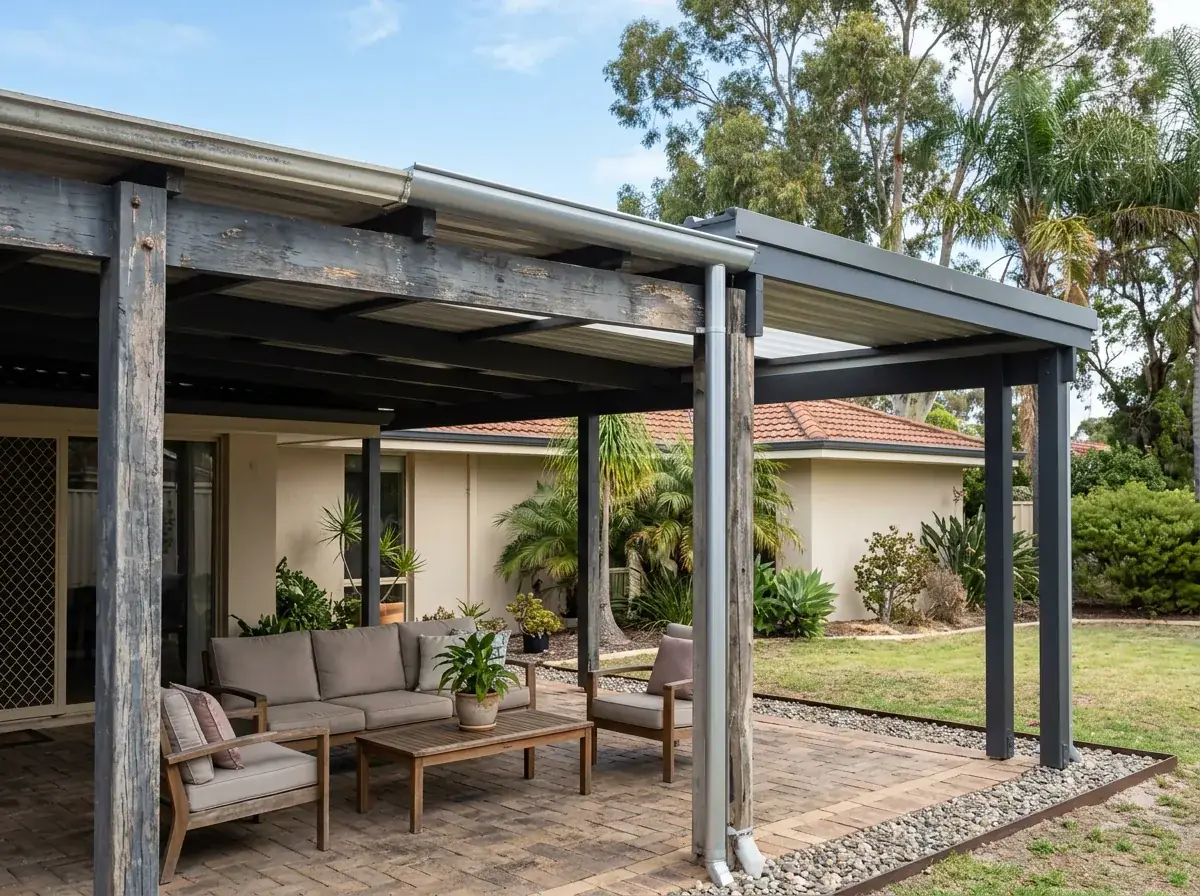
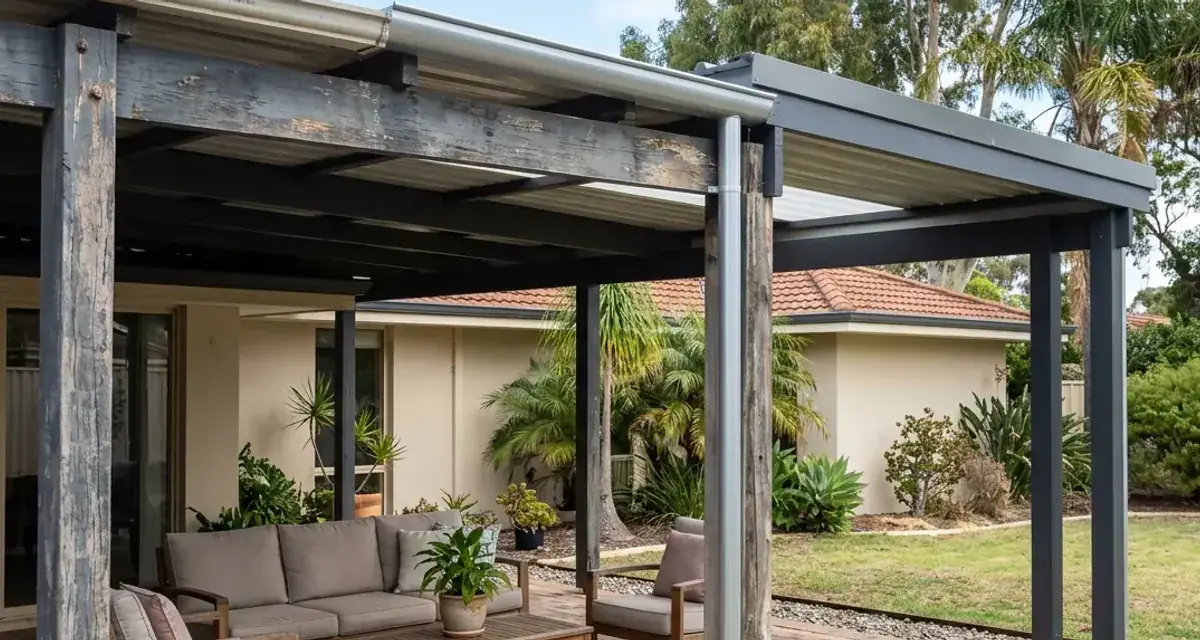
A repaired flat roof patio on an established Perth home, weathered original timber posts and beams alongside a brand new charcoal steel post, beam and roof section, the gutter running true again
  • Experience18 years in Perth
  • Engineer certifiedEvery span signed off
  • InsuredHomes and business
  • Warranty10-year workmanship

In short

What we look at first

Most repair calls are a leak, a sagging roof or a rusted post. The visible problem is often not the cause, so the first job is finding what is.

Each has a cause worth finding before anything gets sealed. A leak fixed with silicone comes back, usually in the next hard winter, usually worse.

We diagnose first, then quote the actual fix. Sometimes that is an hour's work and sometimes it tells you the structure is finished.

Patio Repairs built in Perth
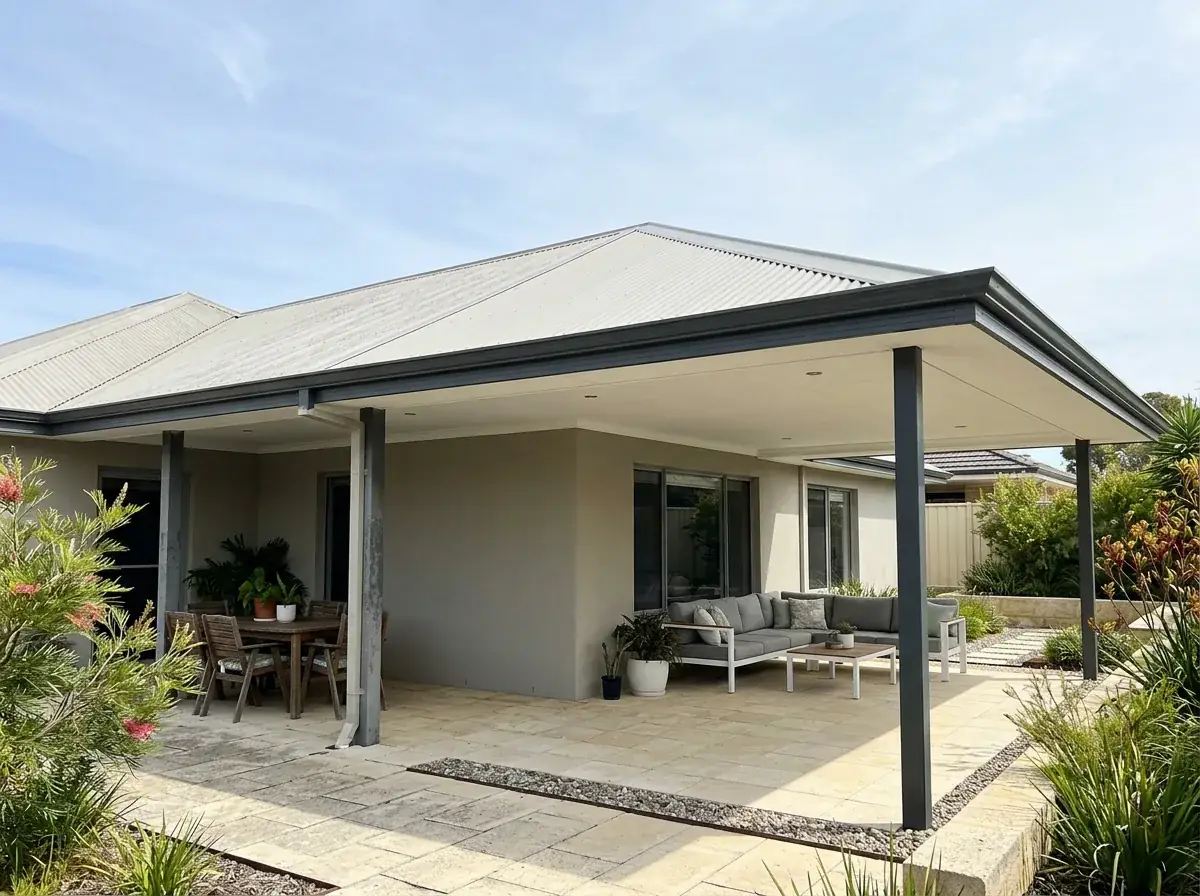
What a sound one looks like. Gutter running true, posts plumb, no sag along the fascia.

The cause

Where the leak actually starts, which is rarely where it shows.

The structure

Posts, beams, fixings and footings, because a sag is a load problem.

The scope

What needs doing now, what can wait, and what is not worth doing.

The test

Hosed and checked before we leave, so you know it is actually fixed.

Why usPerth & Peel
  • Engineer-certifiedWind loading and footing detail, certified before anything is ordered
  • Permit lodged by usWe put the application in with your local council
  • Flat roof specialistsIt is the whole business, not a line on a menu
  • One team throughoutThe person who measures is the person who hands it over

Specification

The flat patio build, in numbers

Every figure is confirmed on site. On a repair the numbers depend on what is actually failing, which is rarely what you can see from the ground.

Common leak sources

Flashing laid over instead of under, reversed sheet laps, perished fixing washers

Ponding causes

Insufficient fall, sagging purlin or beam, gutter set too high at the low edge

Post base check

Hammer test, paint scraped back, section thickness measured at ground level

Gutter faults

Blockage, sagging between brackets, undersized profile, single downpipe on a wide roof

Storm damage checks

Edge and corner fixings, lifted sheet, flashings, bent purlins, post base movement

Polycarbonate

Yellowed and brittle sheet replaced rather than patched

Structural repairs

Beams, posts and connections repaired to an engineered detail, not improvised

Free site measure

Want a number for the repair

Tell us what it is doing and roughly when it started. We will get up there, find the cause and quote the fix.

Finding where a leak starts

Water travels. A drip appearing halfway along the house wall often enters two metres away at a lifted flashing and runs along a purlin before it falls.

So diagnosis starts at the high side and works down. The flashing into the existing roof, the sheet laps, the fixings, and the junction where the patio meets a wall or a downpipe.

Flashing is the most common culprit by a wide margin. On tiled roofs it is usually a flashing laid over the tiles instead of under them, and on metal roofs it is a lap running the wrong way.

Fixings come second. Screws driven at an angle, or with perished washers, let water in one drop at a time for years before anyone notices the stain.
Ponding, fall problems and stained sheeting

If water sits on your patio roof after rain, the fall is wrong or the roof has deflected. Both are worth fixing rather than living with.

Ponding does real damage. Standing water works into the laps, holds dirt against the coating, and leaves the tea-coloured staining that makes an otherwise sound roof look neglected.

The cause is usually one of three things. Insufficient fall from the outset, a sagging purlin or beam, or a gutter set too high at the low edge so water backs up onto the sheets.

Fixing it can mean packing purlins, adjusting the gutter line, or in the worst cases re-supporting the roof. A cosmetic clean without addressing the fall just resets the clock.

Rusted post bases and structural corrosion

Post bases fail more often than any other structural element on a Perth patio. Water sits at the joint between steel and concrete, and rust works from the outside in.

The paint hides it. A post can look perfectly sound and have lost most of its wall thickness at the very bottom, which is exactly where the load is highest.

Testing is straightforward. A firm tap with a hammer at the base tells you a great deal, and where there is doubt the paint gets scraped back and the section measured.

The repair depends on how much is gone. Surface corrosion is treated and recoated; significant section loss means replacing the post or splicing to an engineered detail with a new base plate.

Sizes

Flat patio sizes and what they suit

Starting points, not a price list. These are the structures we get called out to most, so you can see where yours sits before we come.

Flashing repair at the house junctionWhat it suitsA leak appearing along the wall on an otherwise sound roofWorth knowingDiagnosis starts at the high side, because water travels before it drops.
Gutter and downpipe upgradeWhat it suitsA gutter that overflows in every decent Perth downpourWorth knowingBlockage and sag are quick. An undersized profile on a wide roof is not.
Post base repair or spliceWhat it suitsCorrosion at ground level on a frame that is otherwise straightWorth knowingSurface rust is treated and recoated; real section loss is an engineered detail.
Storm re-fix and sheet replacementWhat it suitsLifted edges and missing fixings after a wind eventWorth knowingThe natural moment to bring a sparse 1990s fixing pattern up to current requirements.
Beam assessment and additional supportWhat it suitsA visible sag in the front beamWorth knowingMove furniture out from under it. This is the one repair we do not ask people to wait on.

None of these are fixed. Tell us what is going wrong and we will tell you what fixing it takes.

Gutters, downpipes and overflow

A gutter that overflows in every decent downpour is either blocked, undersized, sagging, or discharging into a soakwell that no longer works.

Blockage is easy to rule out and easy to fix. Perth's peppermint and jacaranda leaf drop fills a patio gutter faster than most people clean it.

Sagging is next. Brackets at too-wide centres let the gutter belly between them, water pools, and the extra weight makes it worse over time.

Undersized is the harder one. Where a wide roof drains to a single downpipe, the honest fix is a second downpipe or a deeper gutter profile, not another clean-out.

Storm and wind damage

Perth gets serious wind events, and flat patio roofs take uplift rather than the sideways load people imagine. Sheets lift at the edges and corners first, where the pressures are highest.

After a storm, the checks are the same every time. Loose or missing fixings, lifted sheet edges, damaged flashings, bent purlins and any movement at the post bases.

Older patios with sparse fixing patterns are the ones that suffer. A roof fixed to a 1990s pattern is not fixed to what current wind provisions call for.

Repairs are an opportunity to bring the fixing pattern up to standard while the sheets are being refixed, which costs very little extra at that moment.

Damaged and degraded polycarbonate

Polycarbonate is the most repair-prone roofing on Perth patios. Ultraviolet exposure yellows it, makes it brittle, and cracks it around the fixings.

Once a sheet has gone brittle it cannot really be repaired. Patching a crack in old polycarbonate lasts a season at best, because the whole sheet is at the same point in its life.

Hail, falling branches and even a stone from a mower will punch through degraded sheet that would have shrugged it off when new.

Replacement of individual sheets is possible where the rest is still sound. Where the whole roof is at end of life, moving to insulated panel or Colorbond is the better use of the money.

Sagging beams and failed connections

A visible sag in a front beam is not a cosmetic problem. It means the beam is working beyond what it was sized for, or a connection has slipped.

The cause is sometimes original undersizing and sometimes a later change. Adding a heavier roof to a frame designed for polycarbonate is a common way to overload a beam years after it was built.

The repair is engineered, not improvised. That may mean an additional post, a plated or replaced beam, or reworking the connection at the post head.

Anything under a sagging beam should be moved until it is assessed. It is the one repair we do not ask people to wait on.

Safety checks on an older structure

Patios that came with the house are worth checking once. Many were built by the previous owner, sometimes without approval and often without engineering.

The quick assessment covers post bases, footings, beam-to-post connections, sheet fixings, flashings and the gutter and stormwater path.

It also answers the paperwork question. If the structure was never permitted, you will want to know that before you sell rather than during the settlement process.

Where the structure is sound, we say so and leave it alone. Recommending work on a patio that does not need it is a short-term business model.

Insurance and storm damage

Storm damage is often claimable, and insurers usually want more than a quote. A written assessment of what failed, supported by photographs taken before anything is cleared, carries far more weight.

Emergency work comes first regardless. Making a damaged roof safe and stopping water entering the house is not something to delay while paperwork is arranged.

Keep the original approval documents if you have them. They tell an assessor what the structure was designed to, which matters when the question is whether it failed early.

Repairs we recommend against

Sealing a leak from the top of a tiled roof is the main one. It works for a season, hides the real fault, and makes the eventual repair harder.

Plating over a corroded post base is another. Once the section has lost material, the load path is compromised and a cosmetic fix is worse than none at all.

Patching brittle polycarbonate is the third. The whole sheet is at the same point in its life, so a repair simply moves the crack a metre along.

Maintenance that prevents most repairs

Two gutter cleans a year prevent more patio damage than anything else on this page. Blocked gutters cause overflow, staining, undermined footings and damp walls.

A wash of the roof and frame matters near the coast. Salt sitting on coated steel shortens its life, and rinsing it off costs nothing but time.

Then a look at the post bases once a year. Catching corrosion while it is still surface rust is the difference between a paint job and a new post.

Roof leaking somewhere?

We will find where it actually comes from. Sealing the stain moves the problem rather than fixing it.

What's included

What a quote covers

Written out rather than implied. The repair itself is in the three columns, and anything we find once the sheets are off is quoted before we touch it.

Diagnosis

  • Leak traced from the high side down, not from where the drip appears
  • Fall measured where water is sitting on the sheets
  • Post bases hammer tested, scraped back and the section measured
  • Gutter, downpipe count and soakwell checked as one system

The repair

  • Flashing reinstalled under the existing roof covering
  • Purlins packed or gutter line adjusted where the fall is the fault
  • Fixing pattern brought up to current wind requirements while sheets are off
  • Structural work to an engineered detail rather than an improvised one

Afterwards

  • A written assessment of what failed, where an insurer needs one
  • A plain answer on whether the structure has life left in it
  • The maintenance that prevents the same call next winter
  • No recommended work on a patio that does not need any

How it runs

Enquiry through to handover

Five steps, in that order. If a repair turns out to need a permit we lodge it, and we will tell you what that adds before we do.

  1. Describe the fault

    Where the water appears, when it appears and what has already been tried. Previous repair attempts tell us as much as the leak does.

  2. Diagnose on site

    We work from the flashing down through the laps, the fixings and the gutter line. A leak fixed without finding the source comes back in the next hard winter.

  3. Scope in writing

    You get the actual fix quoted, along with anything we found that is not urgent yet. Sometimes that scope says the structure is finished.

  4. Carry out the repair

    Emergency work to keep water out of the house comes first, regardless of paperwork. Structural repairs follow an engineered detail.

  5. What to watch

    Two gutter cleans a year, a rinse of the frame near the coast, and a look at the post bases annually. That prevents most of what is on this page.

Recognise this

Three situations we get called about

Most patio repairs enquiries start with one of these. If yours is on the list, we have solved it on a Perth house before.

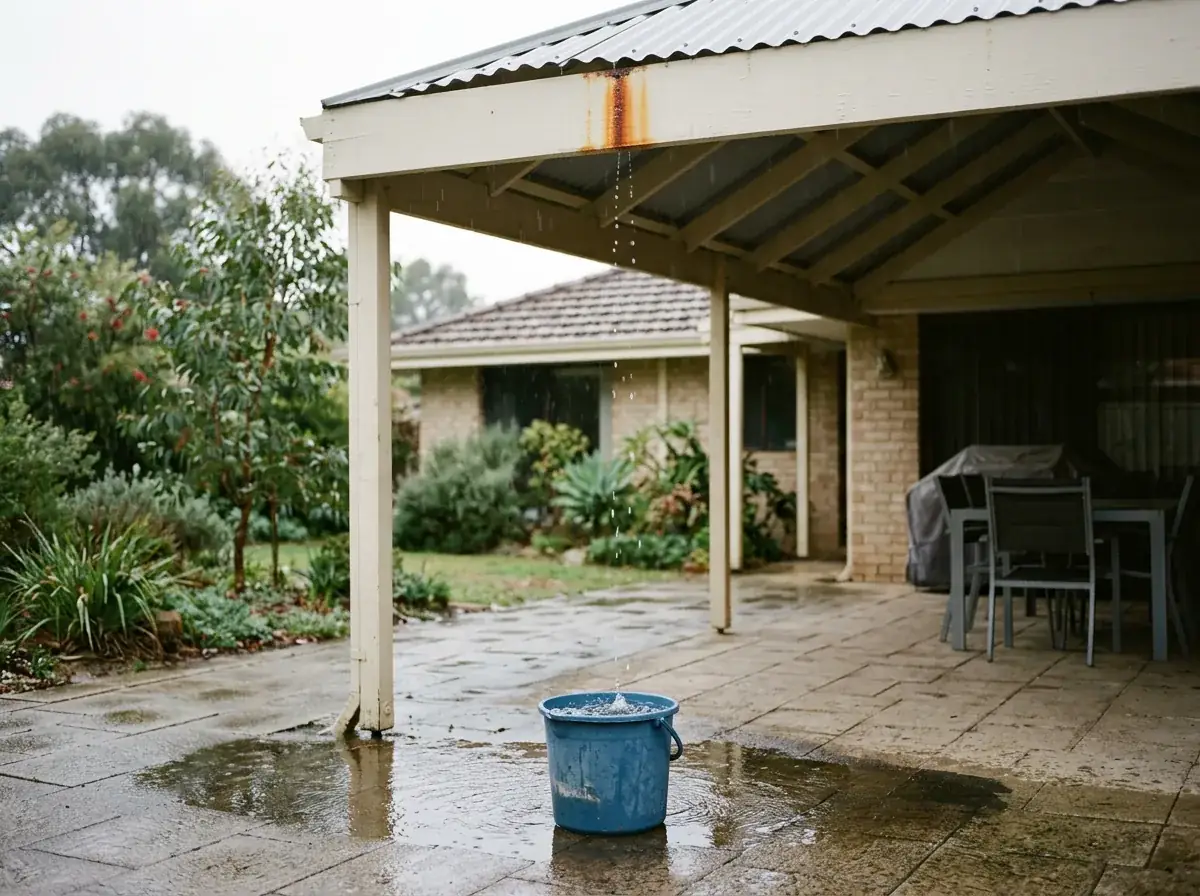
Water dripping from the underside of a patio roof into a bucket on the paving, a rust stain running down the beam above and a wet patch spreading across the pavers

The drip two metres from the leak

Water enters at a lifted flashing, runs along a purlin, then falls wherever the purlin stops. Chasing the drip rather than the entry point is how the same leak gets sealed three times.

The gutter that overflows every June

It is blocked, sagging, undersized, or draining into a soakwell that silted up a decade ago. The first two are an afternoon; the last two are the ones that undermine footings.

The sag in the front beam

A visible sag means the beam is working past what it was sized for, or a connection has slipped. Adding a heavier roof to a frame designed for polycarbonate is the usual way that happens years after the build.

Frequently Asked Questions

No Perth patio builder publishes repair pricing and we will not invent a figure. It depends on whether the fault is a flashing, a sheet, a gutter or a post, and on whether the frame is worth repairing at all. The assessment is free and the quote is fixed.

Almost always a flashing problem. On a tiled roof the flashing has usually been laid over the tiles instead of dressed underneath them, and on a metal roof the lap often runs the wrong way. Sealant applied on top is a temporary fix.

Yes. Ponding works water into the sheet laps, holds dirt against the coating and causes staining. The cause is either insufficient fall from the outset, a sagging purlin or beam, or a gutter set too high so water backs up onto the roof.

It depends on how much steel is left. Surface corrosion can be treated and recoated, adding years. Significant section loss at the base is structural, and the post needs replacing or splicing to an engineered detail with a new base plate.

It is blocked, sagging, undersized, or draining to a soakwell that has silted up. Blockage and sagging brackets are quick fixes. A wide roof draining to a single downpipe needs a second downpipe or a deeper gutter profile, not another clean-out every autumn.

Look for loose or missing fixings, lifted sheet edges at the corners, damaged flashings, bent purlins and any movement at the post bases. Flat roofs take uplift, so edges and corners fail first. Older sparse fixing patterns are most at risk.

Not durably. Once polycarbonate has yellowed and gone brittle from ultraviolet exposure, the whole sheet is at the same point in its life, so a patch lasts a season. Individual sheets can be replaced if the rest of the roof is sound.

Treat it as urgent. A visible sag means the beam is working beyond what it was sized for, or a connection has slipped. Move furniture out from under it and have it assessed. The repair is engineered, usually an added post or a replaced beam.

Yes. The assessment covers post bases, footings, beam and post connections, sheet fixings, flashings and the stormwater path, and it also flags whether the structure appears to have been approved. If it is sound, we tell you that and leave it alone.

Free site measure

A leak shows up metres from where it starts. We get up there, find the actual cause and quote the fix, at no cost.

Book a Measure(08) 6186 7419

Repair it or replace it?

An honest answer costs you nothing. Sometimes the frame is worth keeping and sometimes it is not.


Get a quote

Tell us about the job

Send through the basics and we will arrange a time to measure up. No obligation, no pressure.

Quote request

Fill these in and we will ring you to book the measure. Only the last box is optional.

Pick the closest one. We will sort the detail on site.

Quick check

Loading a new icon check…

These details come to the office and stay there. We do not sell them or pass them on. Privacy policy

Rather talk

(08) 6186 7419
  • Monday to Friday 07:00 to 17:00
  • Saturday 08:00 to 14:00

Site visits by appointment, including after hours.